
Searching St. Clair County Civil Dockets
MiCOURT Case Search is the statewide public starting point. It serves a St. Clair County civil docket, and its Civil category covers domestic and family matters too. For name, case, and calendar searches, the local St. Clair Web Inquiry route still helps. It works when its session entry is open. Both services return a public case history. Michigan courts call it informational rather than the official record.
A case number and filing year give the cleanest results. Party-name searches can return many matches, especially in the 72nd District Court's civil docket. Open the case identifier. Read its court location, case type, filed date, parties, events, hearings, and public outcome entries. A circuit, district, or probate label also matters. It tells you which clerk should get a document request.
- Choose MiCOURT name search or case-number search and select the Civil category only if that filter fits the matter.
- Enter an exact known party name, or a case year, number, and type without wildcards.
- Open the public case ID rather than stopping at a result row.
- Review the Register of Actions, hearings, motions, orders, judgment entries, and any linked public documents.
- Contact the clerk that holds the court file for a certified document, a copy not shown online, or access to a public redacted record.
St. Clair Civil Docket Search Fields
The MiCOURT public search requires a last name or business name for ordinary name searching. First name, middle name, and a four-digit birth year work as filters. Case-number searching needs three things. It works from a year, number, and case type. The Web Inquiry guide allows partial criteria as well. These include a year, case ID, and case type. Its familiar county pattern is 00-000000-XX. A live MiCOURT result, however, can carry another valid case-number form.
| Field | Search role | Format or result |
|---|---|---|
| Last Name or Business | Public name search | At least two characters; first and middle names are optional refinements. |
| Case Year and Number | Direct lookup | Use four-digit year where available and do not add wildcards. |
| Case Type | Optional or conditional filter | Web Inquiry uses a two-letter component in its illustrated case pattern. |
| Case Status and Filed Date | Optional narrowing fields | Active and Closed filters plus date ranges can reduce a broad result set. |
St. Clair County's 72nd District general civil fee page lists court-service costs. It is a fee reference, not a civil-docket search screen.
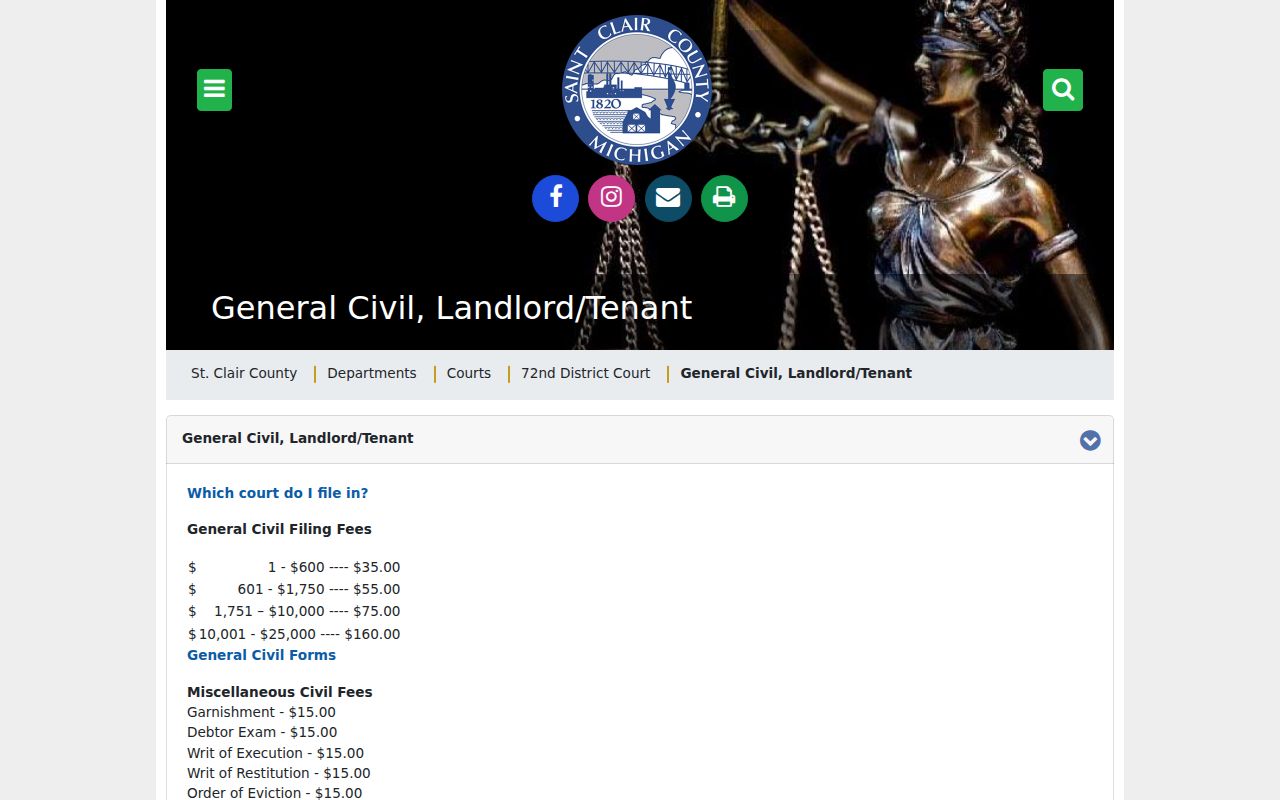
Those fee materials separate filing and copy questions from the public case-history lookup. Use the lookup to locate an existing civil matter.
Inside a St. Clair County Civil Docket
A St. Clair County civil Register of Actions can show the plaintiff or petitioner, defendant or respondent, attorney entries, filed date, case entitlement, events, hearings, motions, orders, judgment, balance, and related appeal information. What the docket proves is narrow. It tells a reader that an event was entered. It may not include every pleading image, exhibit, protected address, account detail, or full financial record. Court rules on redaction and restriction still apply.
| Case title and parties | The public case caption and party roles, such as plaintiff, defendant, petitioner, or respondent. |
|---|---|
| Filed date and status | When the case opened and the public status shown by the system. |
| Register of Actions | A dated sequence of complaint, answer, motion, order, hearing, judgment, appeal, and other events. |
| Hearing entry | Public date, time, location, officer, and hearing information when available. |
| Judgment or balance | A docketed outcome or displayed balance, not a current payoff statement or substitute for the filed judgment. |
| Related case | A cross-reference or appeal indicator when the public system supplies one. |
A status of "closed" says little by itself. It does not reveal whether the case ended by dismissal, settlement, judgment, consent order, or another event. Read the public disposition, order, or judgment entry, then ask the clerk for the filed record when more detail is needed.
St. Clair Civil Case Boundaries
Money draws the main civil dividing line in St. Clair County: $25,000. The 72nd District Court handles civil matters within that statutory jurisdictional limit. The 31st Circuit Court takes civil damage matters beyond it. Small claims carry their own county-page limit of $7,000. Some probate proceedings look civil. Estate accounting, guardianship, or conservatorship belong with the Probate Court instead of the ordinary civil docket.
| Case category | Likely St. Clair court | Public-record route |
|---|---|---|
| Civil case within $25,000 | 72nd District Court | MiCOURT or Web Inquiry, then the District Court Clerk. |
| Small claim within $7,000 | 72nd District Small Claims | District civil or small-claims clerk route. |
| Civil damage case above $25,000 | 31st Circuit Court | Public search, then County Clerk circuit-record process. |
| Estate, guardianship, or conservatorship | Probate Court | Probate clerk and its separate record channel. |
Michigan's district-court jurisdiction statute sets the dollar limits that decide which St. Clair County civil cases stay in district court and which ones move up.
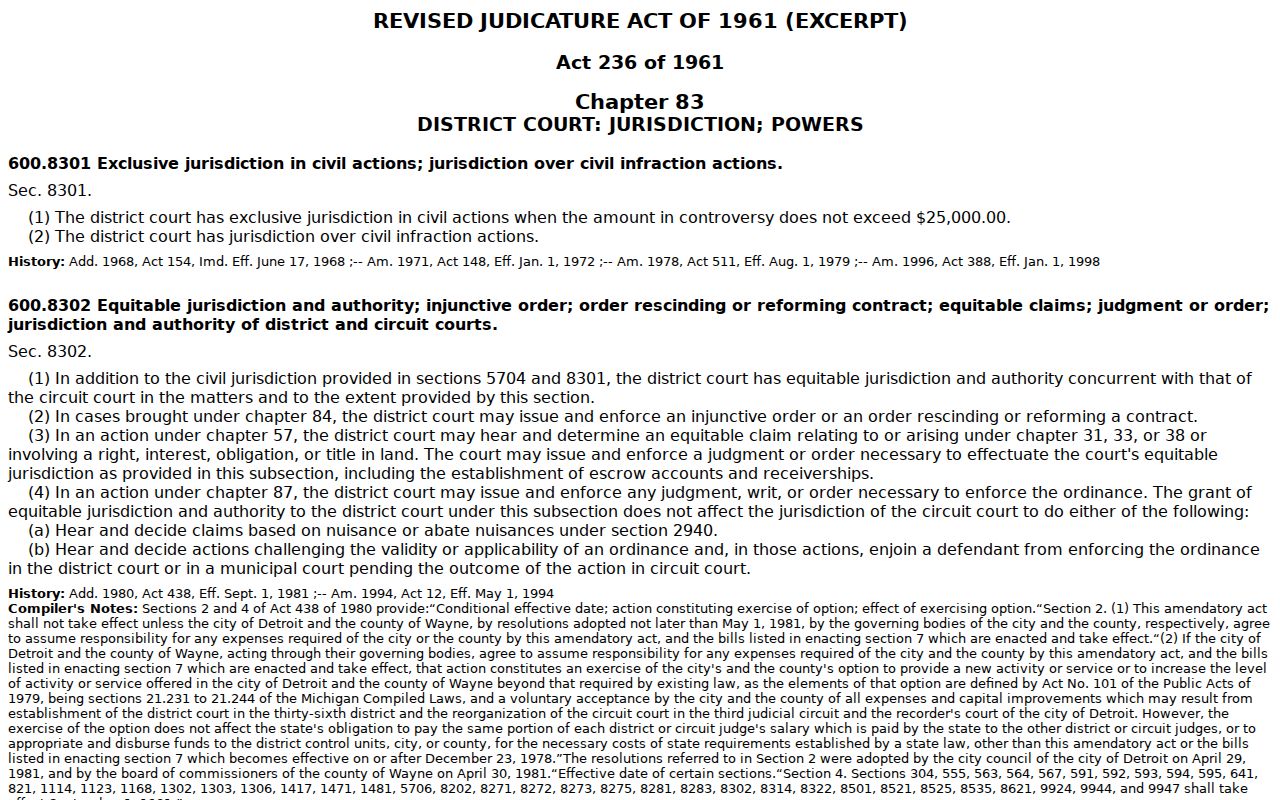
That statutory boundary shapes both the proper court search and the clerk who can supply the civil document. Search the court with jurisdiction first.
Civil Case Types on the Docket
The 72nd District civil docket includes general civil cases, small claims, summary proceedings, civil infractions, and ordinance matters. These sit within its jurisdiction. The 31st Circuit Court keeps civil damage cases above the district limit. It also holds the Family Division's domestic-relations docket. Probate holds its own estates, trusts, guardianships, conservatorships, mental-health matters, and probate appeals. Each category can display different public fields and different restrictions.
Port Huron and Marine City are two locations of the same 72nd District Court. The local concurrent-jurisdiction plan allows filing in either place. It uses Davis Road as a civil and criminal assignment boundary. Does the case history leave the branch unclear? Call before travelling or filing. That way the matter is not directed to the wrong local counter.
Michigan's District Court benchbook describes more. It covers the broad civil, traffic, criminal, preliminary-exam, and summary-proceeding scope of this court level.
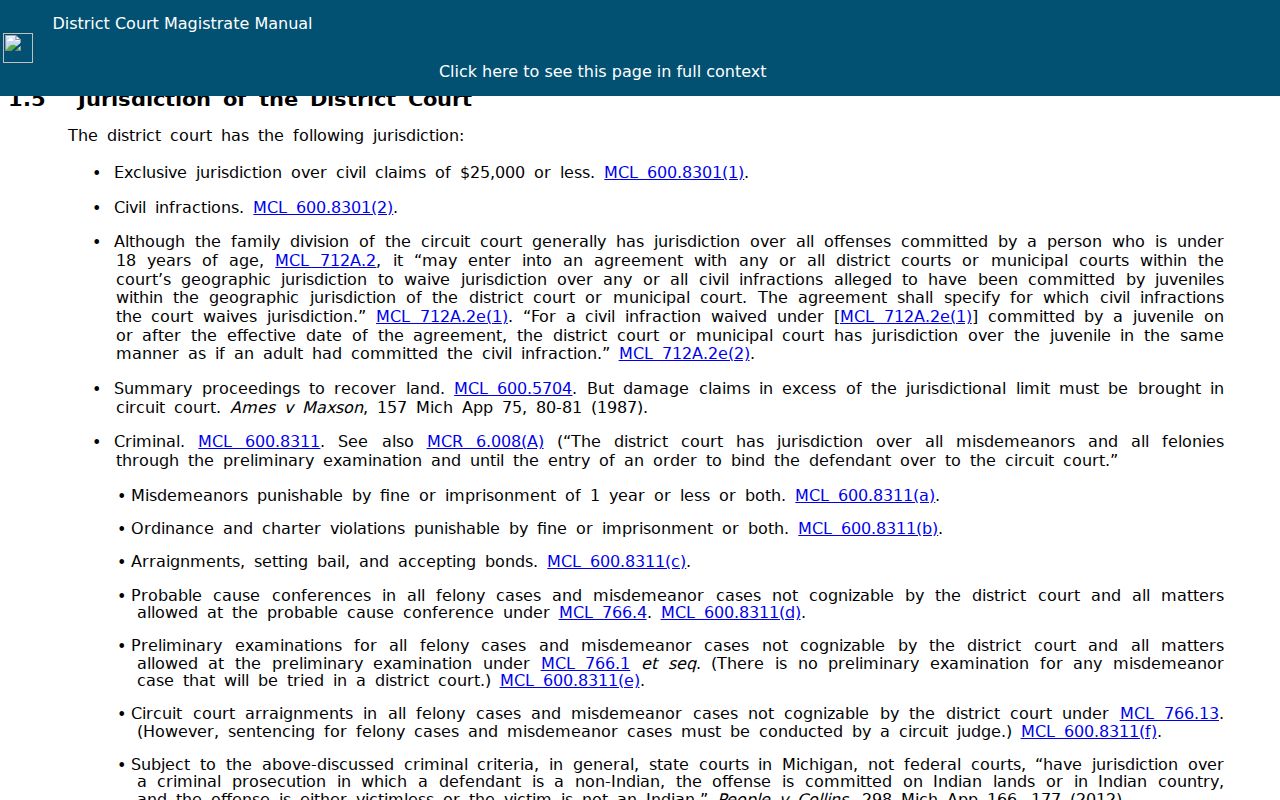
That wider jurisdiction explains why a search result must be read for its case category and court location. The county name alone is not enough.
St. Clair Civil Docket Status
A civil docket status and a filed judgment answer different questions. The status is only a case-management label. A public judgment entry can identify a court action. Yet the current amount needed to satisfy an obligation may require the proper party or a current payoff statement. The 72nd District Court gives clear advice. A civil judgment should not be paid to the court. Contact the plaintiff or the plaintiff's attorney instead.
That reported total is separate from the court's small-claims and summary-proceeding work. A careful search narrows results by case type, date, and court location rather than treating a bare party-name match as the needed civil record.
Civil Docket Settings and Hearings
Two displays can carry the same civil hearing. St. Clair Web Inquiry shows a calendar. It is built around a hearing-date range. Ask for a span longer than seven days but no more than 31, and it may also want a location or hearing officer. Click the case ID link there to open the public case history. MiCOURT Court Display works the other way. It lines up date, party name, time, hearing information, case number, and CTN in one row.
Always set the calendar result beside the newest case-history event. A later filing can change things. A continuance, reset, notice, order, or hearing-held entry can shift what an earlier date really means. Need to confirm a St. Clair civil date by phone? Call the Port Huron civil desk at 810-985-2077. The Marine City branch answers at 810-765-4057. Circuit cases belong to the County Clerk at 810-985-2200. Probate matters go to 810-985-2066.
St. Clair Civil Filing Route
Searching a St. Clair civil docket and filing into one are different jobs. The county runs a local electronic-fax process for 72nd District Court pleadings. An existing-case electronic-fax form covers circuit filings. District rules treat a submission received by 4:30 p.m. on a regular county business day as filed that same day. Anything after that carries a next-business-day filing date. Two limits matter. The local route caps filings at 50 pages. It never excuses you from serving the other parties, either.
Michigan's Family Division statute lays out the circuit-court structure covering domestic-relations and other Family Division matters.
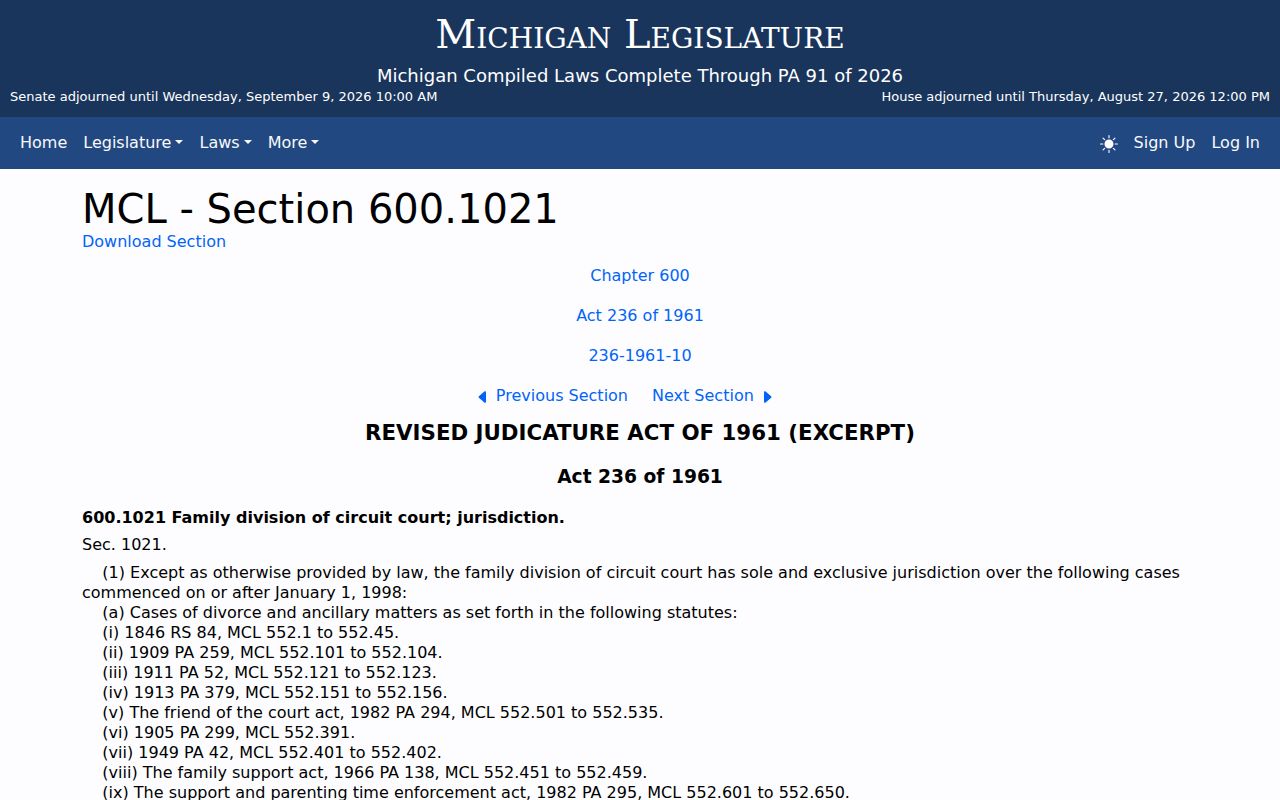
Filing through MiFILE or a local submission channel is one thing. Seeing the document image in the public case-history display is another, and the first does not guarantee the second.
Civil Docket Access Rules
MCR 8.119 opens trial-court case records to the public. A rule, statute, or court order can say otherwise. Inspection and copying are allowed, with reproduction costs where they apply. MCR 1.109 governs protected identifying information and redaction. When a filing holds restricted material, request the public or redacted version.
Court-record rule: A Michigan FOIA request does not control judicial case records. Request access from the clerk that keeps the St. Clair civil docket under the court-record rules, and use FOIA only for nonjudicial county or city administrative records.
For in-person civil records, go to Room 2900 for Port Huron District Court. Room 1100 holds circuit records. Room 2600 is Probate. A District Court public terminal serves anyone pulling public files. A federal civil case does not live in any county civil docket. Use the Eastern District of Michigan and PACER for that.
St. Clair Civil Docket Copies
The County Clerk's online court-document request form works only for 31st Circuit records the County Clerk keeps. Fill in a document description, the parties, the opening year, and the case number if you know it. The published route charges $15 for an emailed PDF. A $5 online processing fee applies too. A certified copy is optional at $10. District and Probate records must be requested from their own clerks.
Fee tables vary by case type. The 72nd District general civil page lists $10 plus $1 per page for certified copies, and the county's small-claims page shows separate filing tiers. Check the current amount, and confirm the clerk actually holds the file, before you send money. The circuit form promises no turnaround time and spells out no general mail procedure.
Note: A browser printout of a civil case history is not a clerk-certified copy of a filed judgment or order.