
Searching St. Clair County Criminal Dockets
The practical first stop is MiCOURT Case Search. It returns public case history for a St. Clair County criminal docket. Criminal, traffic, and civil-infraction matters all fall inside, though it is not the official file itself. Locally, the St. Clair Web Inquiry offers name, case, and calendar searches. You must first accept its agreement screen. Enter just enough to single out the right court record, then open the case identifier instead of trusting the results row.
Court level comes next. Misdemeanors and felony preliminary examinations belong to the 72nd District Court. A felony can be bound over for trial. The 31st Circuit Court then becomes the principal record keeper. A case result may list location, status, parties, charges, events, hearings, financial entries, and a public disposition. Treat the online view as informational. For a certified document or a hearing date that cannot slip, call the clerk.
- Open MiCOURT and choose a name or case-number search.
- Enter a last name of at least two characters, or use the known year, case number, and case type.
- Select Criminal/Traffic/Civil Infractions and Active or Closed only when those filters help narrow the results.
- Open the matching case ID and review the court location, Register of Actions, hearings, charges, and public outcome entries.
- Check the other court level when a felony may have moved from district examination to circuit trial, then contact the responsible clerk for a copy.
Note: A criminal result missing from the public display does not prove that no court record exists. The clerk may still hold the file.
St. Clair Criminal Docket Search Fields
For a public name search, MiCOURT needs a last name or business name. First name, middle name, and a four-digit birth year are optional filters. The case-number search can take the case year, number, and type. Wildcards are not supported in the current public interface. Older Web Inquiry help material documents a common local pattern, 00-000000-XX. That means two-digit year, six-digit identifier, two-letter case type. MiCOURT can display other formats.
| Search field | Use | Local note |
|---|---|---|
| Last Name or Business | Required for public name search | Use at least two characters; first and middle names can narrow results. |
| Case Number | Direct case search | Use the known identifier without wildcards and add the year when available. |
| Case Category | Optional filter | Choose Criminal/Traffic/Civil Infractions for the public criminal case-history layer. |
| Filed or Offense Date | Optional date range | Use the displayed MM/DD/YYYY format when a date is known. |
The official St. Clair Web Inquiry agreement screen is the doorway to the local public-record search. Accept its terms, and the available inquiry group opens.
This entry layer sits apart from any case result. Its public-information notice is worth heeding: verify the case history with the court that keeps it.
Inside a St. Clair County Criminal Docket
A St. Clair County criminal case history reads as a chronological Register of Actions. It can identify the case number, court, filed date, case title, status, and party roles. Attorney entries, charges, and hearing settings appear too. Event dates, financial orders, and public disposition or sentence information can also appear. Labels shift with the court and the case type. Remember what an entry is. It records that an action occurred, not the pleading, transcript, or full order behind it.
| Case ID | The court identifier, sometimes in a local pattern such as 00-000000-XX. |
|---|---|
| Court location | The branch or court level that holds the public case history. |
| Charges and level | Public charge descriptions and classifications where shown; read the attempt field with the charge-level field. |
| Register of Actions | Dated filings, notices, motions, orders, hearings, pleas, judgments, and other events. |
| Hearing information | Date, time, location, officer or judge, and hearing description when public. |
| Disposition | A public outcome entry, which should be read with the related order or judgment when available. |
MiCOURT flags one trap in felony charges. An attempted felony can show FELONY in the charge-level field, while a separate field notes the attempted, conspired, or solicited context. Read the fields together. They are one charge, not two.
St. Clair Felony Criminal Docket Transfer
Many St. Clair County felonies travel a two-level path. The 72nd District Court handles the preliminary-examination stage. After bindover, the 31st Circuit Court takes the felony trial case. The district record can show an examination, a waiver, an adjournment, or the bindover itself. A circuit result then carries the later motions, plea events, and trial settings. Sentencing, judgment, and appeal activity show up there too. Search only one court and the docket story stays incomplete.
| Court | Criminal docket role | Record route |
|---|---|---|
| 72nd District Court | Misdemeanors, ordinance matters, traffic misdemeanors, and felony preliminary examinations. | MiCOURT or Web Inquiry, then the District Court Clerk. |
| 31st Circuit Court | Felony trial matters after bindover, including later criminal proceedings. | MiCOURT or Web Inquiry, then the County Clerk for circuit records. |
Federal criminal matters do not appear here. They run through PACER and the Eastern District of Michigan, outside any St. Clair County state-court criminal docket search.
How a Criminal Case Moves
The public sequence often opens with a complaint, charging document, citation, warrant, summons, or appearance entry. Arraignment, plea and bond events, a preliminary-examination setting, motions, notices, orders, continuances, and later hearings can follow. From there a case may reach bindover, a plea, or trial setting. So can dismissal, a verdict, or another public result. Wording varies across St. Clair criminal files.
Docket flow: Charge Filed › Arraignment › Preliminary Examination or Pretrial › Plea or Trial › Disposition › Sentence or Judgment
Later entries can add fines, costs, restitution, probation activity, payment entries, a closure, or an appeal reference. A "closed" status alone explains nothing. The public disposition, judgment, or order entry supplies the why.
St. Clair Criminal Docket Terms
Local court pages use case history, Register of Actions, court record, docket, and case event for parts of the same public record. A few definitions help. Meaning comes from the event context, the court level, and the most recent dated entry.
- Arraignment
- A criminal proceeding where charges are addressed and a plea, bond condition, or next setting may appear.
- Preliminary examination
- A district-court felony proceeding before a possible bindover to the circuit court.
- Bindover
- The transfer of a felony matter from district preliminary proceedings to circuit trial jurisdiction.
- Continuance or reset
- An event moving a scheduled date; compare it with later notices and settings.
- Disposition
- A recorded outcome label that should be read with the related order, judgment, or event history.
Courts That Hold Criminal Dockets
Two offices hold St. Clair County criminal dockets. The 72nd District Court Clerk keeps district criminal dockets at Port Huron and Marine City, with a traffic and criminal line at 810-985-2072 in Port Huron and a Marine City branch line at 810-765-4057. Circuit criminal dockets sit elsewhere. The County Clerk/Register of Deeds serves as clerk for the 31st Circuit Court and keeps those court records in Room 1100 of the county courthouse, at 810-985-2200. A public search can show related proceedings under both offices, so knowing which clerk holds the file saves a step.
To check a hearing date, start with the public case history and the local calendar tools. The Web Inquiry calendar and MiCOURT Court Display both surface hearing information. Still, a reset, a reassignment, or a slow update can leave the online docket out of date. Call the clerk that has the file to confirm.
St. Clair Criminal Docket Terminal
What if a district case never shows up online? The District Court Clerk offers another local route. According to the official Adult Probation FAQ, each District Court Clerk office has a public computer. Anyone can review public misdemeanor files there. Port Huron keeps its terminal in Room 2900 at the county courthouse. The Marine City branch sits at 2088 South Parker Street. Before ordering a copy, ask the clerk whether the file is public. Ask what reproduction cost applies too.
Searching with just a name? Bring an approximate filing year, the likely court level, and any known case type. If the record seems to have moved, ask one question. Was the matter bound over to circuit court? One trap deserves mention. The County Clerk's circuit form does not cover District Court records. A district request sent to Room 1100 can stall the whole docket search.
Note: A courthouse terminal widens public access, but restricted records stay restricted.
Sealed Dockets and Public Access
Michigan Court Rule 8.119 starts from openness. Trial-court case records are public unless a statute, court rule, or court order restricts access. The rule allows inspection of public records. Copying is allowed too. Reasonable reproduction costs apply. MCR 1.109 covers the other side of the coin. That rule governs protected personal information and redaction in filed papers. A docket entry can stay public even when an attachment does not.
Public-record boundary: Michigan FOIA does not supply a bypass for court records because the judiciary, including a county clerk acting as circuit clerk, is excluded from the relevant public-body definition. Ask the clerk that holds the docket for the public or redacted version under MCR 8.119.
The official Michigan Court Rules Chapter 8 lays out the inspection, reproduction, and restriction framework that governs any St. Clair County criminal docket. Reading it tells you when a court record opens and when it closes.
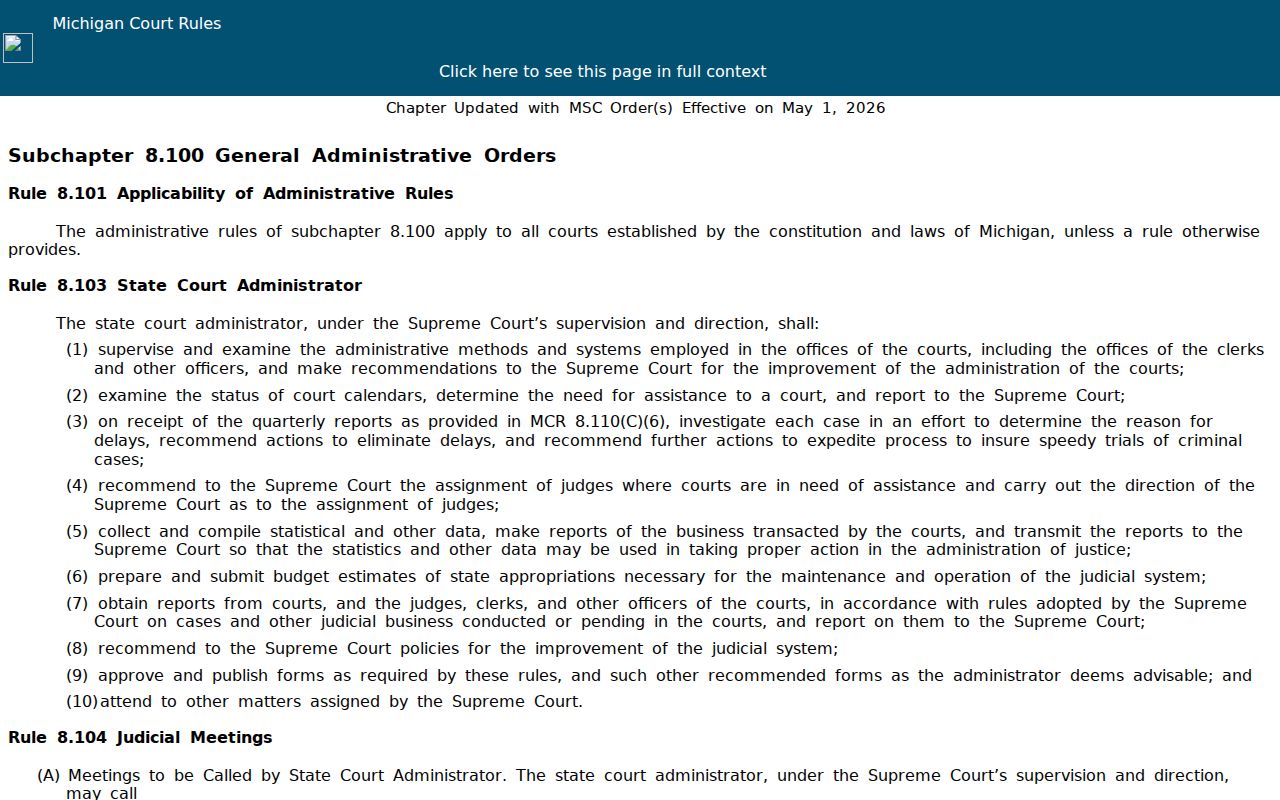
A register entry can be public while its document image or identifying information stays off limits.
That split is the point of Michigan juvenile court rules. They show why calendar access and file access can part ways for protected proceedings.
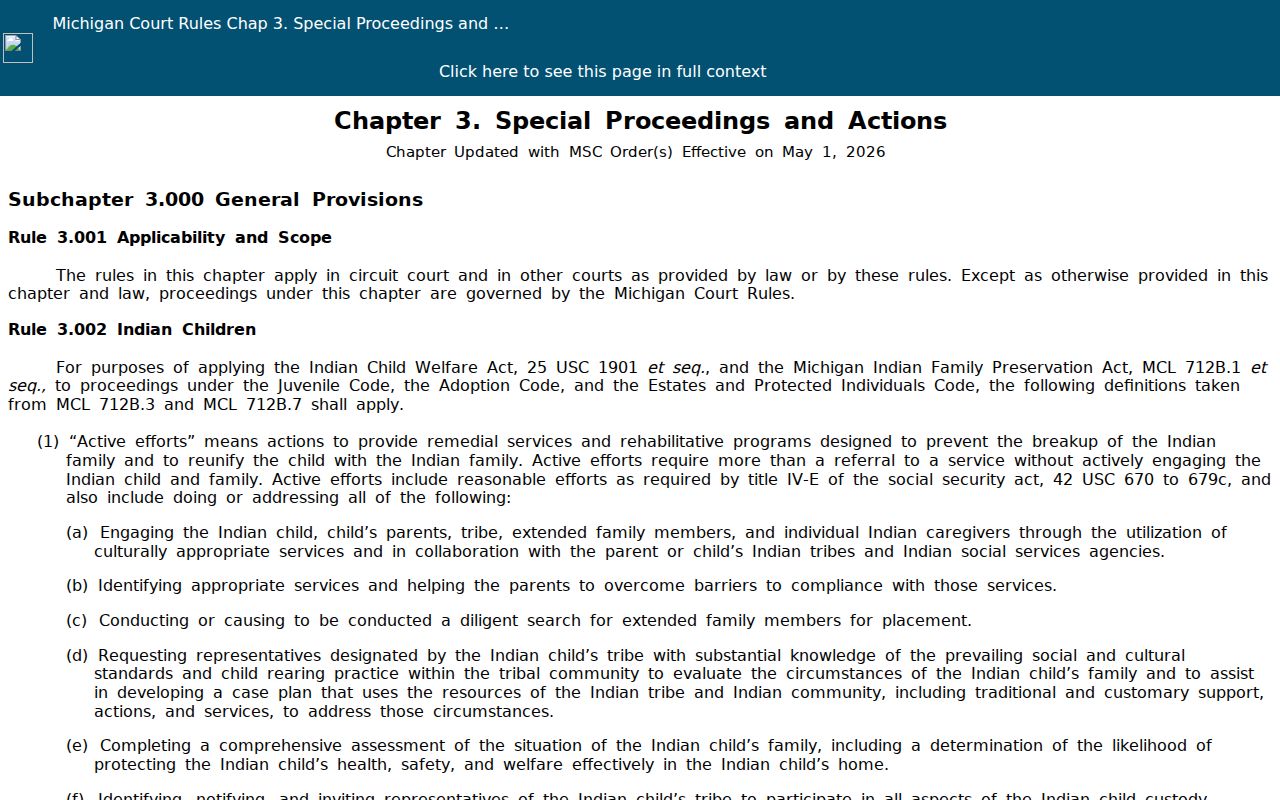
Expect limited or missing results for juvenile, adoption, PPO, mental-health, set-aside, and other protected categories in a public docket search.
St. Clair Criminal Docket Copy Routes
A case history is not the same as a filed complaint, order, transcript, or certified judgment. Request what you actually need. For a 31st Circuit criminal document, the County Clerk court-document request form asks for a few details. These include the document description, the parties, and the opening year. The case number goes in too, if known. The published form lists a $15 emailed-PDF charge plus a $5 online processing fee. A certified copy adds $10. It works only for circuit records held by the County Clerk.
District Court criminal documents follow a different path. For those, or for a public file review, call the District Court Clerk. Do not use the circuit form. Ask for the public or redacted record when access is limited. The form promises no turnaround time, no general mail route, and no district-copy procedure. Confirm those details with the responsible clerk before you pay.