
Searching the St. Clair Court Docket
Begin with MiCOURT Case Search. The name search needs a last name or business name. First name, middle name, and a four-digit birth year are optional. Case-number searching works too. So do Active or Closed filters, a public category, and date filters. Wildcards are not supported. Open a likely result. Check the court, location, case type, and case history before you rely on it.
There is also an older local route: St. Clair Web Inquiry. Past its agreement screen, the system gives you Name, Case, and Calendar tabs. A result opens a Register of Actions, the dated list of public case events. Neither route is the official record. If a St. Clair court docket search comes up empty, write down the spelling you tried. Note the case number if you have one, and the court level. Then call the right clerk.
- Search MiCOURT by name or by the full St. Clair case number.
- Use status, category, date, and court controls only to narrow a known matter.
- Open the St. Clair result and read its court location and Register of Actions.
- Try St. Clair Web Inquiry if a local case-history route is useful.
- Confirm a current setting or requested copy with the court custodian.
St. Clair's Historic Court Split
The city of St. Clair gave the county its name. Yet it is not the county seat today. County history records early courthouse, jail, post-office, and newspaper activity in the village of St. Clair. Port Huron took over as county seat in 1871. That past fuels a common question: seeing a city name on a record does not mean that city runs its own court docket or keeps the file.
Modern routing follows court level instead. The 72nd District Court holds public district case history for ordinary lower-court matters. Its branches sit in Port Huron and Marine City. The 31st Circuit Court handles circuit-level matters, with records kept through the County Clerk. Probate runs its own separate court and clerk channel. So St. Clair matters as a case location, but not as a stand-alone docket office.
The official City of St. Clair site covers municipal services and city administration. None of that amounts to a St. Clair court docket search. That line helps you tell a city record apart from a judicial case history.
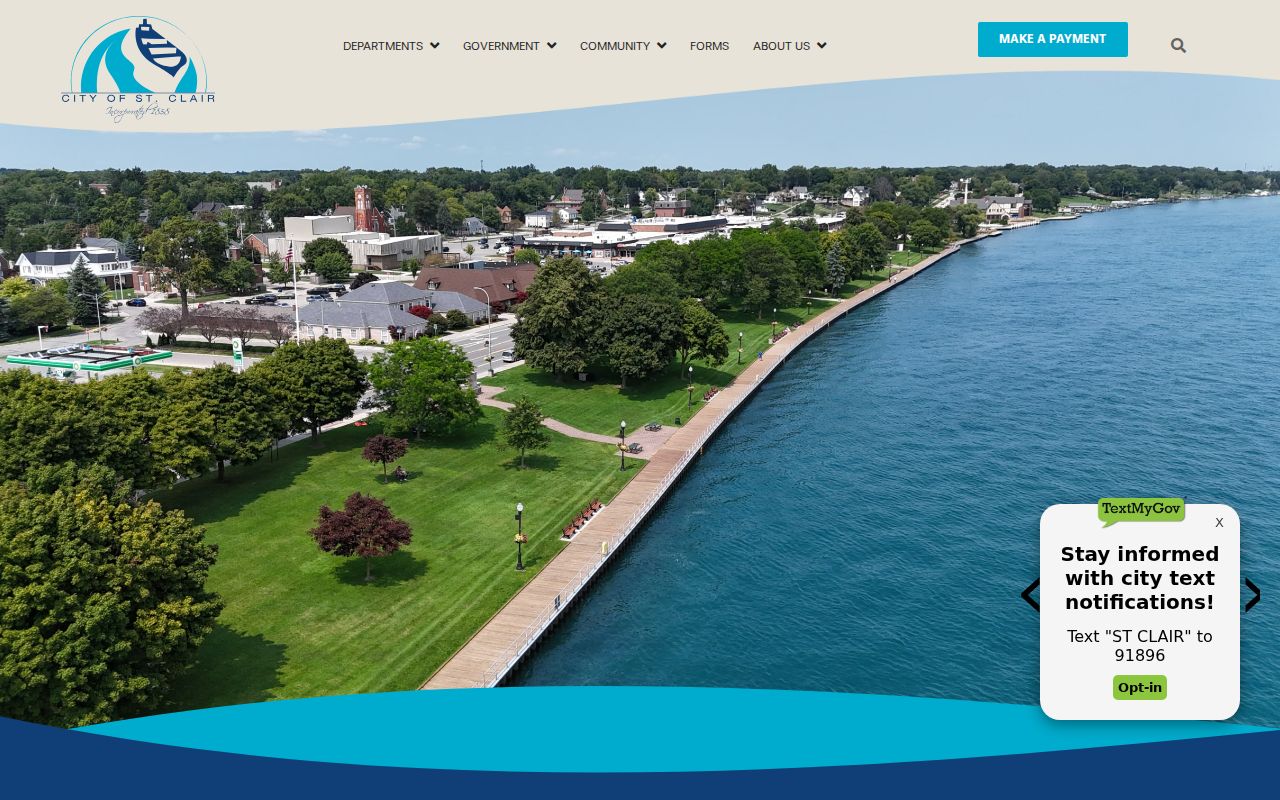
City services can add useful local context to a St. Clair request. They still cannot answer for a court date, judgment, citation, or Register of Actions. Those follow the court and clerk that hold the case.
Note: St. Clair's historic role does not create a city court counter, payment portal, judge, or hearing calendar separate from the county court system.
St. Clair Municipal Court Basics
Michigan court-structure material names no independent St. Clair municipal court. For St. Clair traffic, civil infractions, misdemeanors, ordinance issues, small claims, and lower-dollar civil matters, look instead to the 72nd District Court. The county calls it the People's Court. It handles the lower-court matters most residents run into. A St. Clair address on a citation does not turn the case into a city-court case.
St. Clair City Hall sits at 547 North Carney Drive, St. Clair, Michigan 48079. The city lists 810-329-7121 for its municipal building. The City Clerk handles city administrative records, city actions, and city FOIA matters. The city sources name no St. Clair court judge, court calendar, court payment screen, or city case lookup. Those gaps matter when your request concerns a court event rather than a city document.
St. Clair City Records or Court Files
A St. Clair city record and a St. Clair court file answer different questions. Ordinance text, council actions, and city service records belong with the City Clerk's process. A citation, court date, plea, order, judgment, or case history belongs with the 72nd District Court. Or it belongs to the 31st Circuit Court or Probate Court, depending on the matter. Sending a court request to City Hall gets you nowhere near the judicial file.
The St. Clair city directory shows the City Clerk's public-facing role. It is a route to city administration, not a court-record counter. The County Clerk's online document form has its own limit: it serves 31st Circuit records only. It does not cover 72nd District or Probate records. Identify the court first, then request the document.
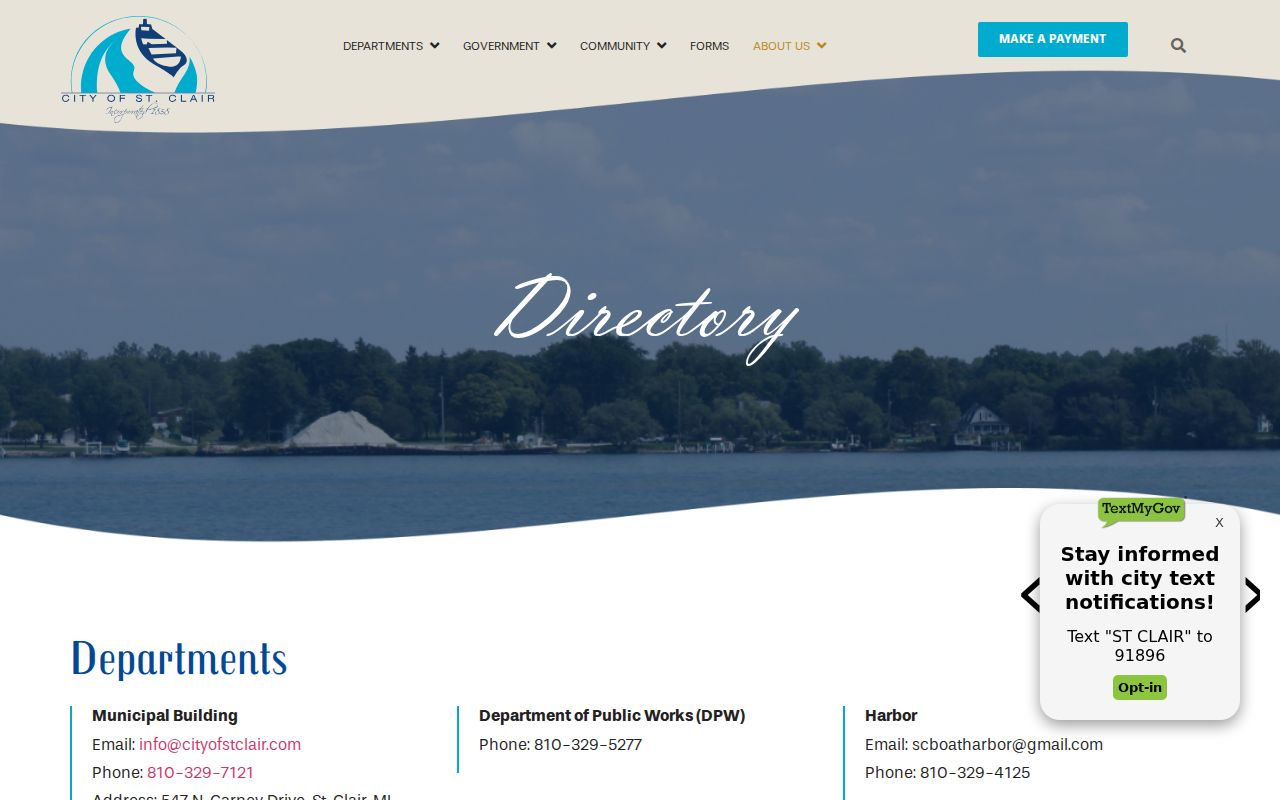
The local directory reinforces the split. St. Clair municipal contacts handle city business. The case history and any filed document stay with the court system that received the case.
Court Dates and Settings in St. Clair
Read a St. Clair court date from the case history. Keep the court location right beside it. MiCOURT's public display and the St. Clair Web Inquiry Calendar Search offer date-oriented views. The Register of Actions, meanwhile, lays events out in sequence. A continuance, reset, notice, order, or hearing-held entry later on can change what an earlier date means. For a near-term setting, call the responsible court after you check the public result.
| Date | The court day shown in the St. Clair case history or calendar result. |
|---|---|
| Time | The listed hearing time; it may be a docket call rather than an individual hearing. |
| Court location | The displayed 72nd District branch, Circuit Court, or Probate route controls the confirmation step. |
| Hearing officer | A judge or officer field may appear in a calendar result; keep its label rather than inferring a role. |
| Setting type | The event text can identify an arraignment, pretrial, motion, trial, review, or other St. Clair court setting. |
St. Clair's city calendar is not a court hearing calendar. A community event listing says nothing about a court appearance. The judicial date comes from the case history, the court's calendar layer, or the clerk. Check those sources before trusting any city listing for a St. Clair court date.
St. Clair Court Record Labels
St. Clair County reads one docket under several names. The 72nd District Court speaks in People's Court terms. Statewide, MiCOURT exposes its public layer as MiCOURT Case Search. The county's own Web Inquiry materials call the same chronology a Register of Actions. Some simply call it the case history. Whatever the label, each one leads a St. Clair user to the public list of events. That list is the court docket. None of them promises that every filed document image can be viewed online.
- Case history
- The dated public sequence of court events attached to a St. Clair case.
- Register of Actions
- The local label for the procedural event list, including filings, hearings, orders, and dispositions where public.
- Setting
- A scheduled court event that should be read with its date, time, location, and later history entries.
- Filed document
- The actual pleading, order, judgment, or other item in the court file, which may require a clerk request.
A case history can sit online without any document image attached. What if you need the filing itself, not the list of events? The St. Clair County court record search route sorts out which clerk holds the paper and which screen only shows the docket summary.
Traffic Tickets in St. Clair
In St. Clair, a traffic ticket or civil infraction belongs to the 72nd District Court. There is no St. Clair municipal-court docket for it. Start with the ticket number or case number. Then check MiCOURT or the local case-history route. The ticket names the court that received the case. District branches sit in Port Huron and Marine City. The St. Clair city name alone won't identify the right clerk. For payment, the county's 72nd District payment page accepts Visa, MasterCard, and Discover at any time and states that an enhanced access fee applies. It also warns users to select the correct Port Huron or Marine City court location. One caution matters. Under the county's civil-infraction information, payment admits responsibility and waives a hearing. A reader who wants that hearing should follow the ticket instructions before paying. Want countywide court-record and date context for a citation? See the St. Clair County traffic tickets page. It still can't replace the location listed on the ticket or the District Clerk's confirmation of a current case.
St. Clair Ticket Location Checks
Location matters here. A traffic or criminal question for the Port Huron District route goes to 810-985-2072. Port Huron civil and small-claims questions use 810-985-2077. The Marine City branch uses 810-765-4057. Under the County Concurrent Jurisdiction Plan, Davis Road serves as the assignment boundary for civil and criminal matters. District cases may be filed at either branch. Rely on the notice, not a St. Clair mailing address. Rely on the public case history too. For a past-due FAC or FCJ amount, the county directs you to call. Ask for the exact balance. Guessing is risky. A wrong online court selection can leave a St. Clair case overdue. That warning is more useful than treating a payment screen as a general case lookup. The County Clerk's circuit electronic-payment page is a different animal. It covers only 31st Circuit restitution, fines, and costs. An ordinary St. Clair district ticket does not go through it.
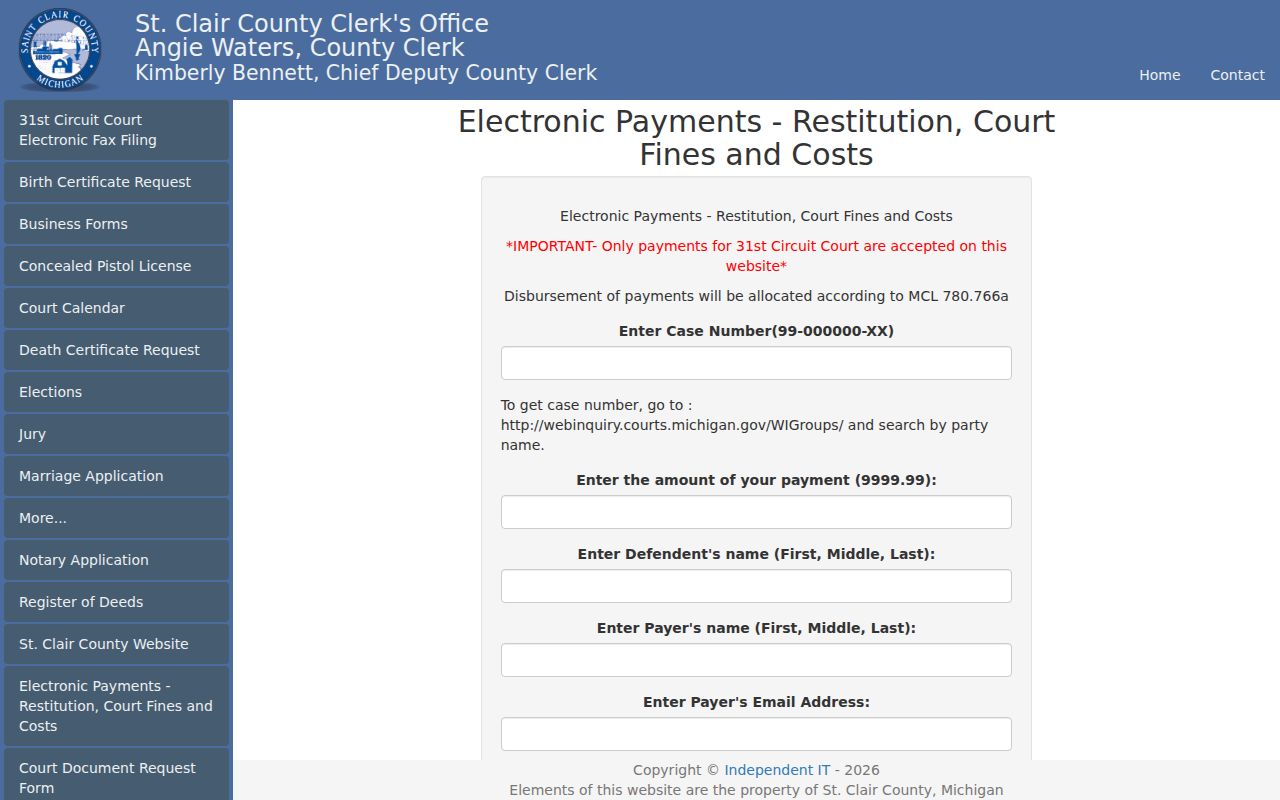
Keeping circuit and district payment routes separate saves real confusion. A convenient county form is not the same as the court named on your St. Clair ticket.
Note: Before paying a St. Clair ticket, compare the case number and the court location printed on the citation with the location selected online.
Where St. Clair Cases Go
Jurisdiction, not geography, decides where a St. Clair case lands. Traffic, civil infractions, misdemeanors, ordinance matters, small claims, qualifying civil cases, summary proceedings, and felony preliminary examinations all sit with the 72nd District Court. Felony trials move up. Major civil matters and domestic-relations cases proceed in the 31st Circuit Court. Probate Court holds estates, guardianships, conservatorships, and mental-health matters. The city itself is not a court level.
Docket flow: St. Clair city matter › 72nd District Court or other proper county court › 31st Circuit Court of St. Clair County when circuit jurisdiction applies.
Think of that flow as a docket search shortcut. A St. Clair traffic ticket lands in the District case history first, while a felony can leave a preliminary-examination record there and then build a circuit file. Probate works differently. A St. Clair probate matter belongs to the Probate clerk, so court level, case number, and branch will route you better than a city name ever will.
St. Clair's Three Court Counters
St. Clair splits court record access across three offices. Circuit records live with the County Clerk. That office sits in Room 1100 at 201 McMorran in Port Huron, 810-985-2200. The circuit-only request form charges $15 for an emailed PDF plus a $5 processing fee. Want it certified? Add $10. Keep that form away from St. Clair district and probate files. It only fits circuit. District records sit elsewhere. For 72nd District matters, the Port Huron clerk takes traffic and criminal calls at 810-985-2072. Civil or small-claims calls go to 810-985-2077. The Marine City District branch sits at 2088 South Parker Street, reachable at 810-765-4057. Probate occupies Room 2600, phone 810-985-2066. If you can visit, a public misdemeanor computer is available at the Port Huron or Marine City District Clerk's Office. That is a St. Clair fallback. Give the clerk the case number, parties, year, and court level. Add the branch, the document you want, and whether it must be certified. That detail lets the clerk tell you what public inspection can offer. It also covers a plain copy, a certified copy, or a redacted version.
St. Clair Court Record Access Rules
Michigan Court Rule 8.119 sets the baseline for public access to St. Clair court records. Statutes, other rules, and court orders can still restrict a record. Keep one limit in mind. A public case history does not open every exhibit, attachment, or filed document to view. When a St. Clair result looks thin or a filing will not display, ask the court custodian about a public or redacted copy. Ask also how to request it.
Do not reach for a city FOIA request here. Michigan's FOIA definition leaves out the judiciary. It also leaves out a county clerk serving as circuit clerk. So judicial case records sit outside that route. A city FOIA still works for city administrative material. A St. Clair court record, though, follows the court rule. It follows the correct clerk's own process as well.
Key Rules:
MCR 8.119 sets the public-access, reproduction, and restriction framework for Michigan court records.
MCR 1.109 addresses privacy, redaction, and electronic-filing safeguards in Michigan court files.
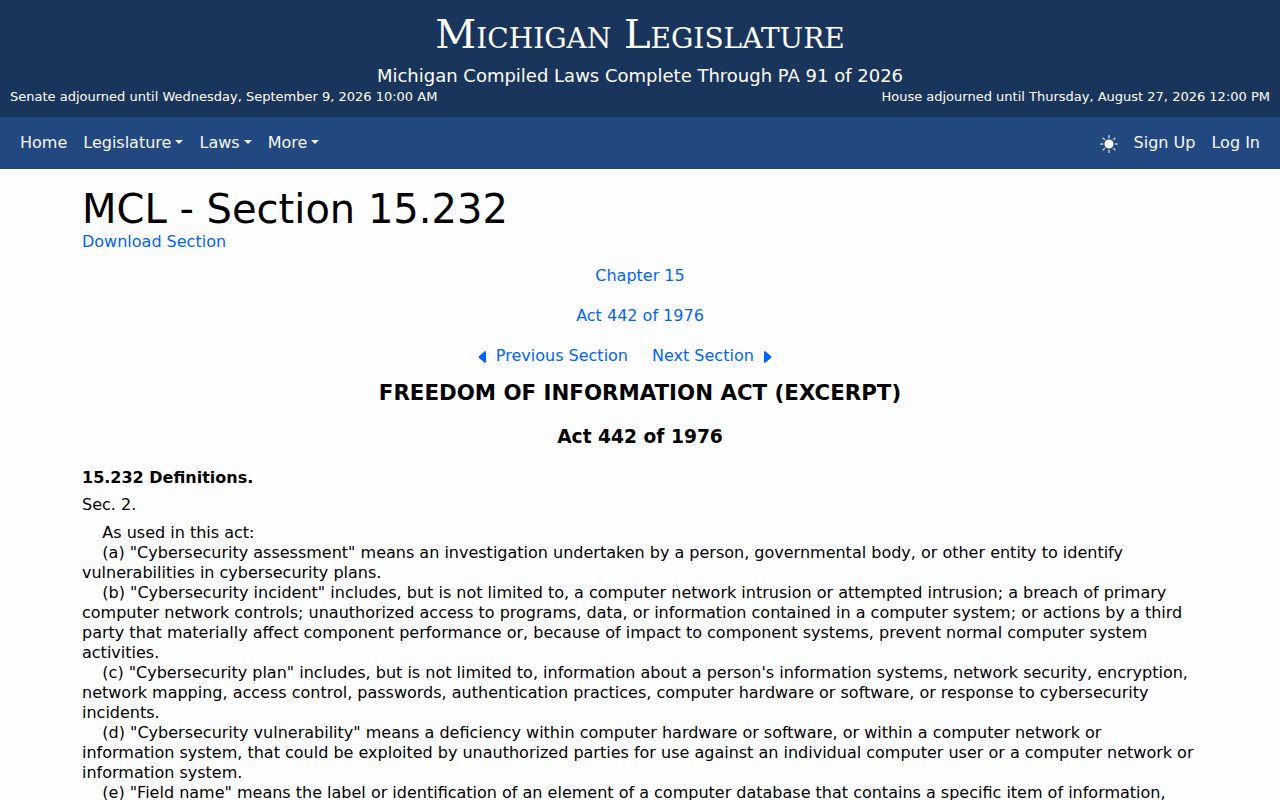
MCL 15.232 excludes the judiciary and a county clerk acting as circuit clerk from Michigan FOIA's public-body definition.
Privacy and redaction rules shape what a public St. Clair court docket can display. Michigan Court Rule 1.109 lays out that context.
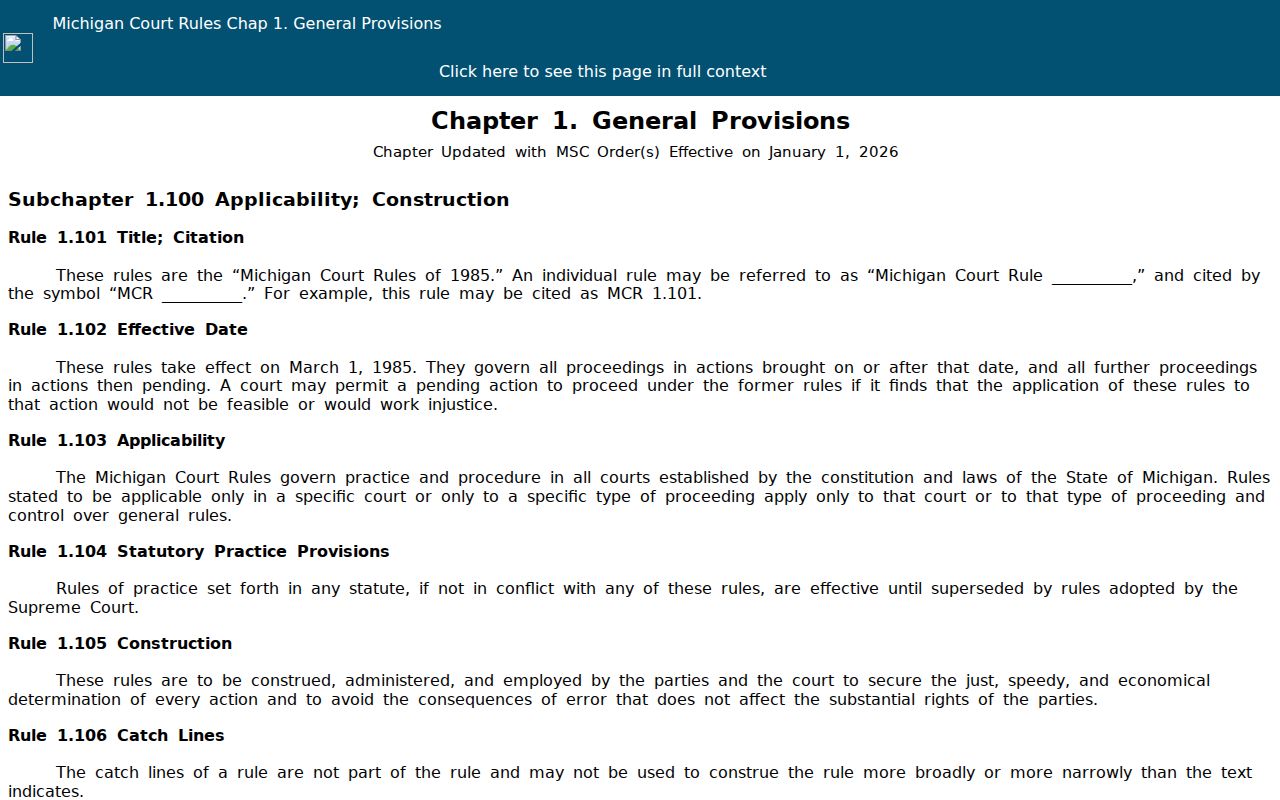
Why might a St. Clair public case history show less than the full filed record? Rule context explains it. Protected personal details get omitted from the display.
The Michigan FOIA definition helps you separate St. Clair city administration from judicial files. It does not add a separate access rule. None exists for the St. Clair court docket.
For any St. Clair court record, two questions govern: which court holds it, and is the item publicly accessible? Whether the city keeps an administrative copy is beside the point.
Before Calling About St. Clair
Prepare before you call a St. Clair clerk. Write down the full case number, or the party names with an approximate year. Know the court level. For District Court cases, know the Port Huron or Marine City branch. Then name the item you need. It might be a hearing date, public case history, filed document, ordinary copy, certified copy, or record-access status.
Those details prevent common routing errors. They keep a District request off the circuit-only form. They separate a city administrative request from a judicial one. They also give the clerk enough to check the right docket. A public portal search with no result is worth reporting too. No hits can mean name formatting, wrong court level, wrong branch, access limits, or indexing. It is not a final answer about the St. Clair matter.
Note: A St. Clair clerk can locate a record more safely when the caller provides the court level, case number or names, branch, and exact record sought.